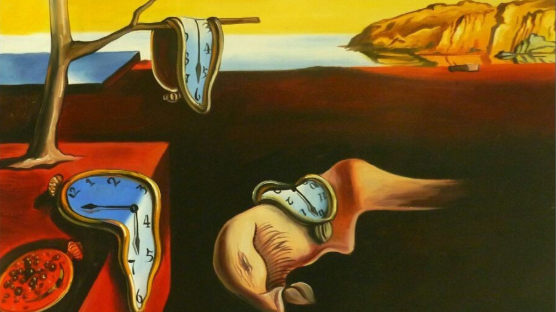
Professionally, we work in environments that prize urgency. But some of the most important work humans do simply refuses to be rushed. Here is how our relationship with time shapes change.
I have a complicated relationship with time.
Professionally, I work in environments that prize urgency. Decisions must be made. Programmes must move at pace. Outcomes must be delivered—deadlines, gantts, timeboxes and sprints. And yet, instinctively, I have always known that some of the most important work humans do simply refuses to be rushed. That knowing did not come from frameworks or theory. It came from living inside long stretches of time that felt interminable while I was in them, and fleeting once I had passed through them.

When Time Stretches
Among the many lessons life had already taught me about the elasticity of time, the long nights I spent with my newborn babies added a different kind of understanding.
I remember feeling utterly exhausted, emotionally raw, and often teary with awe at the wonder of it all and wanting to arrest moments. But then time also stretched endlessly in those hours between feeds, especially when I was trying to soothe them back to sleep and felt certain that this phase would never end. And yet, even then, I instinctively understood that something important was happening. I never wished for my pre-baby life back. I never regretted the time spent.
I knew my babies needed me, and more than that, they needed to know I was that someone that would be there when they needed me. Looking back now, I see those nights as cocoons of time, elastic and surreal, with edges that stretched and contracted depending on where I stood. Inside them, time felt infinite. Outside them, they were gone in a flash. What was created in those moments, bonds, safety, trust, was invaluable.
Time was not something to be endured. It was doing essential work.

What Science Taught Me About Waiting
I encountered the same paradox much earlier in science.
Progress there depends almost entirely on waiting. Waiting for cells to grow, for gels to run, for data to make sense, for abstracts to be accepted, for papers to be reviewed, for grants to be awarded. Each of these waits can shape not just the trajectory of your research, but your entire career, your personal life, even where and how you live.
At the time, you do not stop to analyse it. You just do the next step. But if I am honest, it was often agonising. What strikes me now is how little control we truly have in science and academia, despite the independence we like to believe we hold.
And yet, that lack of control over time while in science taught me something profound.
Commitment itself is a form of controlling time.
You either commit to seeing something through and accept the time that it takes which magically makes it less interminable, or you allow external forces to influence your perception of time—in which case it feels maddeningly like stretching away farther than your patience can handle.
This became especially clear every time a paper went out for review.
Weeks of waiting, sometimes days for the big journals, oscillating between telling myself not to think about it and then thinking about it constantly. We would already be discussing backup journals, impact trade-offs, contingency plans. And underneath all of it sat a deeper question: What did I really want and how willing was I to allow time to do its job?
Was I willing to do the additional work a reviewer demanded? Was speed more important than impact… of deeper understanding of the answer I had discovered to the scientific question I was exploring? Was I prepared to risk being scooped in order to aim higher? These were not technical decisions. They were deeply personal ones, about values, ambition, and how I wanted my work to be recognised.
Once submitted, the paper was no longer fully mine. I had to decide whether I would continue to commit to it, or whether I would compromise for certainty and speed.
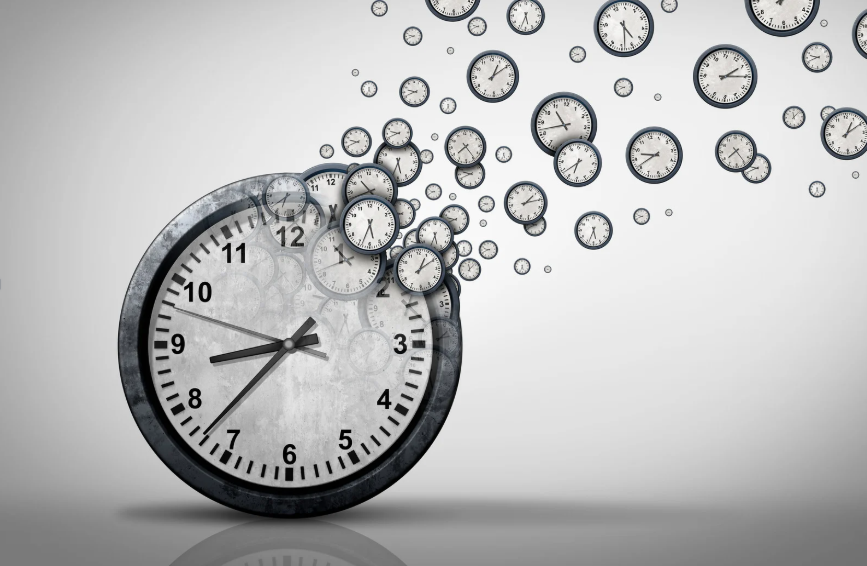
Change Lives in Competing Time Worlds
I see these same tensions play out constantly in change and transformation work in the universities where I design and deliver change programmes.
Senior leaders often live in decision time. They carry responsibility for risk, funding, reputation, and timing, and are required to act quickly, often with imperfect information. Speed, in that context, can feel not just necessary but ethical.
Middle managers inhabit a far more complex time world. They are asked to translate decisions made at pace into something operational and humane. They absorb ambiguity, steady anxious teams, and keep services running while change unfolds around them. They rarely have the luxury of pause, even when they can see that time is doing important work beneath the surface. They tread the tightrope of delivery and change, often balancing with no pole and while their organisational leadership continually blows gales and bounces on the rope.
And then there are those on the ground in higher education, academics and professional services colleagues across IT, registry, student support, and finance, who are asked to do something quietly extraordinary. They must keep business as usual moving, contribute meaningfully to change, and often do so while the change itself may render parts of their current role obsolete.
For many, this is not abstract transformation work; it is a daily negotiation with time, energy, identity, and care. Time can become painful, because the closer successful change comes to implementation, the closer some people move towards the erasure of roles, expertise, or ways of working that once defined their value. When time stretches, there is space to remain useful, relevant, and seen. When it accelerates, that space collapses. Is it any wonder then when they will time to maintain its stretch—what is sometimes labelled as resistance? And if the same were true for you, would you really behave differently?
Alongside them sit those delivering change as their profession. Consultants like me, technology and systems suppliers, change managers and analysts, recruiters delivering the resource required that plugs the gaps into the machinery of the change clock to make sure it keeps ticking. Often moving between organisations, timeframes, and cultures, they are expected to accelerate progress while building trust, to deliver outcomes while navigating institutional rhythm, and to hold space for uncertainty that is not always theirs to own.
From the outside, all of this can look like slowness or reluctance. From the inside, it is usually a careful, human attempt to make change workable and meaningful within the time available.
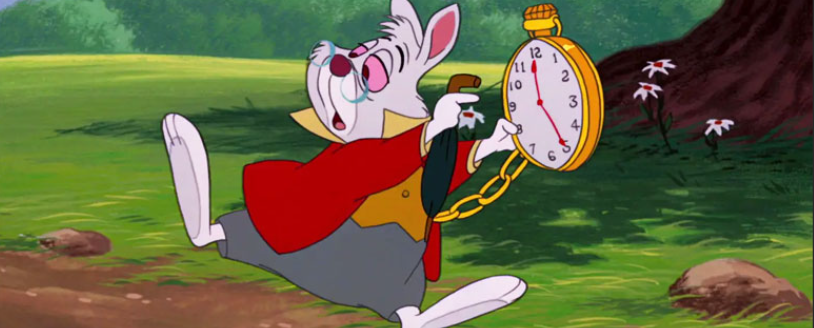
Urgency and Its Cost
Submitting a tender or bid almost always involves personal sacrifice. Evenings, weekends, time I could have spent with my family or restoring myself. Once it is submitted, control disappears. Nothing is guaranteed. The waiting is uncomfortable precisely because the stakes matter.
Over time, I have learned to recognise unhealthy urgency in my body: Heat. A racing heart. Anxiety. A sense that quality is being compromised. I do not believe in gilding the lily, but I do believe deeply in standards. I would rather be a little late than deliver something that does not meet what I consider necessary quality, because I want to ensure that what I deliver will not fall over when I leave and can withstand the slow entropy that time inevitably brings. Where that choice exists of course.
I also recognise when time is being weaponised rather than respected. That is usually when the outcome becomes the sole focus and the human work of understanding, adaptation, and capability building is treated as expendable.

What Time Is Really Doing
Perspective changes everything.
While you are inside a period of deep effort or change, time feels heavy and relentless. From a distance, it collapses. What once felt endless becomes a brief, coherent chapter. Both experiences are true. They are simply observed from different points in time.
In higher education especially, this matters. Universities live across overlapping timescales: academic cycles, institutional memory, professional identity, generational culture. Change enters an ecosystem where time already behaves differently depending on where you stand. Trying to force everything into a single compressed timeline does not create momentum. It creates fragility.
Understanding, trust, and capability still form at their own pace, regardless of how urgent the programme plan insists they should not.
The most meaningful transformations I have been part of were not the fastest. They were the ones that, when I looked back, felt coherent and inevitable, as though they could only have unfolded in the way they did. While I was inside them, they felt long, demanding, and uncomfortable. In hindsight, they were brief moments in a much larger story.
Time, I have learned, is not something to be beaten into submission. It is not an enemy of progress. It is the medium through which meaning, trust, and understanding are formed.
Time is not finite. It is as long as or as short as we want it to be, depending entirely on how we choose to inhabit it.
© Dataqubed Ltd. All rights reserved.